
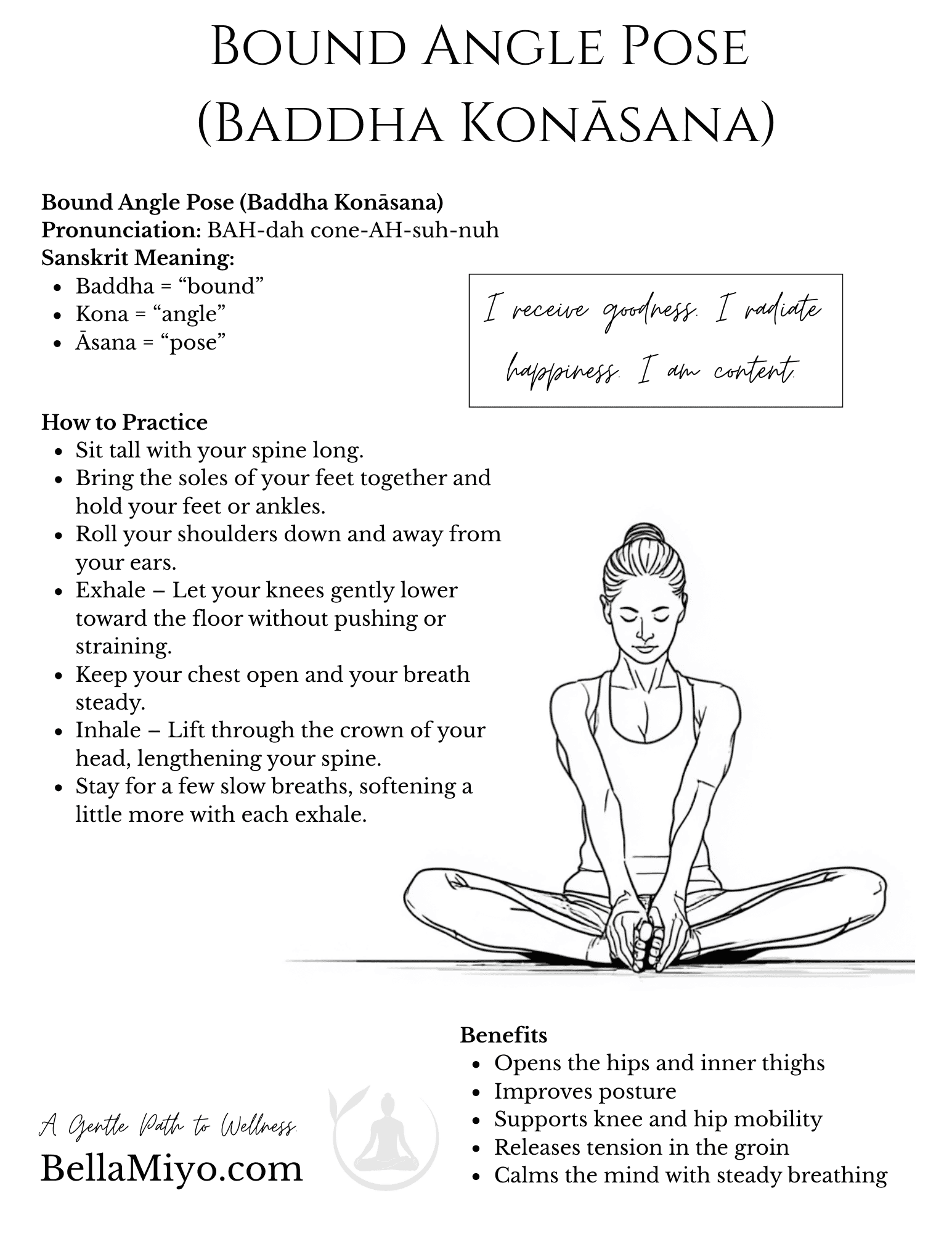
Bound Angle Pose has been one of my favorites for years. You can really see your progress in this pose. It’s simple as a pose—but don’t let that fool you, it still gives so much back.
I’ve been making little minimalist graphics for poses lately, just to break down alignment, breath, and those small details that make a pose feel just right. I’m sharing them here so you can use them too—screenshot, save, or grab the full-res version if you want. For more tips like this, I send a few of my favorite practice notes through my mailing list—nothing extra, just what I actually use.

Why I Love Bound Angle Pose
Bound Angle Pose often gets overlooked because it’s “just sitting with your feet together.” But that’s exactly why I love it—it’s gentle, accessible, and deeply restorative. When I practice it, it feels like a little reset for my hips, spine, and mind.
Here’s why it’s so worth adding to your routine:
1. Opens your hips and inner thighs
Most of us carry tension in the hips without even realizing it. Bound Angle gives your inner thighs a gentle stretch and encourages your hips to release in a calm, controlled way.
2. Improves posture
Sitting tall with your spine long helps build awareness of how you carry yourself off the mat too. It’s subtle work that adds up over time.
3. Supports knee and hip mobility
The gentle rotation in your hips helps keep your joints happy and mobile, especially if you spend a lot of time sitting or in tight positions.
4. Releases tension in the groin
Let your knees soften toward the floor as you exhale, and you’ll feel your pelvis start to relax. It’s a quiet, soothing release that often surprises people with how good it feels.
5. Calms the mind
Paired with slow, steady breaths, this pose encourages a sense of presence. Even a few minutes in Bound Angle can help quiet your thoughts and settle your body.
My Favorite Yoga Gear for 2025
I’ve tried a lot of yoga gear over the years, and these are my top picks for 2025. From mats that actually stay put to props that make every pose feel better, these are the products I reach for again and again in my practice. Whether you’re just starting out or have been at it for years, these essentials make yoga easier, more comfortable, and way more enjoyable.

How I Practice Bound Angle Pose
Some days I just sit here for a few deep breaths, letting my body soften naturally. Other days I gently rock forward and back, or pulse my knees lightly, waking up my hips slowly. I’ve found that approaching the pose with curiosity—not force—helps me notice what my body really needs.
Bound Angle has become my mini reset button. A few slow rounds, and I can feel my hips open, my spine lengthen, and my mind quiet down. It’s amazing how such a simple pose can shift your whole energy.
How to Do Bound Angle Pose (Baddha Konāsana)
- Sit tall with your spine long.
- Bring the soles of your feet together and hold your feet or ankles.
- Roll your shoulders down and away from your ears.
- Exhale – let your knees gently lower toward the floor, no forcing.
- Keep your chest open and your breath steady.
- Inhale – lift through the crown of your head, lengthening your spine.
- Stay here for a few slow breaths, softening a little more with each exhale.
Sanskrit Meaning:
- Baddha = “bound”
- Kona = “angle”
- Āsana = “pose”
A Little Reminder
If you’re new to hip openers, take it slow. Keep your spine long, and never push your knees or hips. Bound Angle isn’t about how far your knees drop—it’s about how present and aware you are in the pose.
Yoga is a lifelong practice, and every pose has something to teach us. Bound Angle is my gentle reminder to slow down, breathe, and listen to my body—and I hope it can be yours too.