
How to Do Cobra Pose (Bhujangasana): Benefits, Proper Form, and My Personal Practice
I’ve been practicing yoga for over 10 years now, and one thing I’ve learned is that the simplest poses can teach us the most. Cobra Pose has been with me from the very beginning. It’s a steady, grounding pose that I don’t think too much into—but its benefits are profound. Cobra pose is much more than it looks.
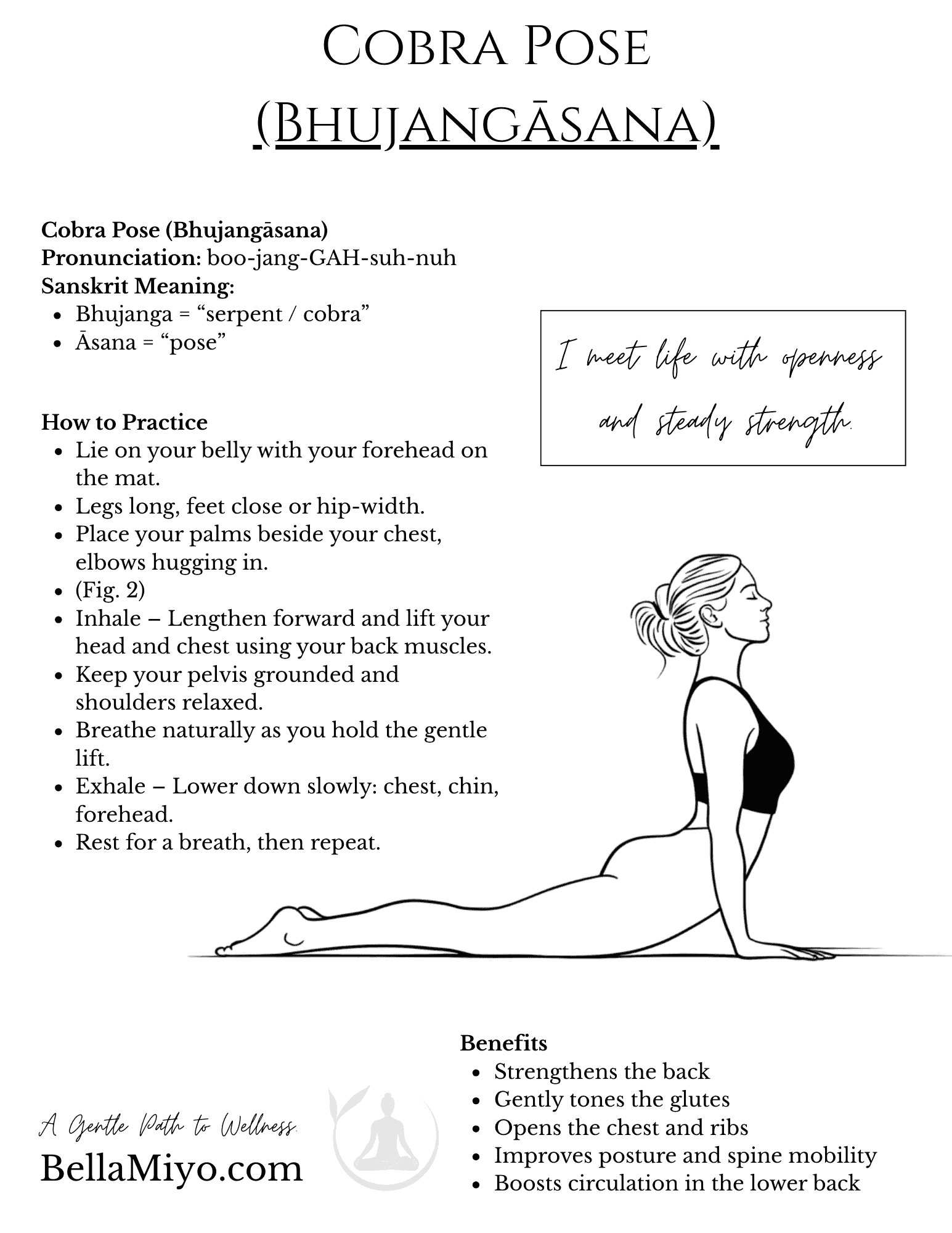
Lately, I’ve been creating my own minimalist pose graphics to better understand each posture—from alignment to breath to the little cues that make everything click. I’m sharing them here because I hope they help you, too. Feel free to screenshot this, save it, or download the full-resolution version here (and join my mailing list- which would be amazing) I only send out REAL content that will benefit you- involving health & wellness.

Cobra Pose, or Bhujangāsana, is a soft backbend that strengthens the spine and encourages the heart to lift. It’s part of the Sun Salutation sequence, but it’s also a beautiful pose to practice on its own when you want to awaken the body without overworking it.
Why Cobra Pose Matters
Cobra often gets overlooked because it’s less dramatic than Upward Dog, but that’s exactly why I love it. It’s accessible, gentle, and incredibly supportive for the whole back body. When practiced with care, Cobra can help undo so much of what life asks of us—sitting, typing, driving, hunching.
Here’s why this pose is so beneficial:
1. It strengthens the back (in a balanced way)
Cobra helps activate the muscles along the spine, especially the mid and upper back. These muscles are essential for healthy posture and protecting the lower back. Unlike deeper backbends, Cobra lets you lift using your back instead of relying heavily on the arms, which builds real support and stability.
2. It gently tones the glutes
You don’t need to clench your butt in Cobra—just a light engagement helps support the lower spine. Over time, this subtle activation builds strength and body awareness.
3. It opens the chest, ribs, and upper abdomen
Most of us spend hours rounding forward. Cobra encourages the opposite movement—lifting through the chest, widening across the collarbones, and giving the front body space to breathe. Many people say they feel more awake and open after just a few slow rounds.
4. It improves posture and spinal mobility
By strengthening the back and opening the chest at the same time, Cobra helps counteract slouched posture. The gentle extension in the spine increases mobility without forcing anything too deep.
5. It boosts circulation in the lower back
Because the pose is rooted in the belly and pelvis staying grounded, fresh blood flow moves into areas that often feel tense or tired. This can be especially soothing if you’ve been sitting a lot or dealing with stiffness.
How I Use Cobra in My Practice
Some days I hold Cobra for three slow breaths. Other days I move through it in waves—lifting a little, lowering a little—letting the spine wake up gradually. I’ve found that approaching the pose with curiosity, not force, helps me tune in to what my body actually needs.
Cobra has become a mini reset button for me. A few rounds on my mat and I can feel my energy shift—my chest feels lighter, my breath deeper, and my mind more grounded.
A Little Reminder
If you’re new to backbends, move slowly. Keep your pelvis rooted. Lift only as high as feels steady. Cobra isn’t about height—it’s about awareness.
And if you’re following along with these graphics I’m creating, I hope they help you connect with the poses the way they’ve helped me. Yoga is a lifelong practice, and it’s beautiful to keep learning together.